
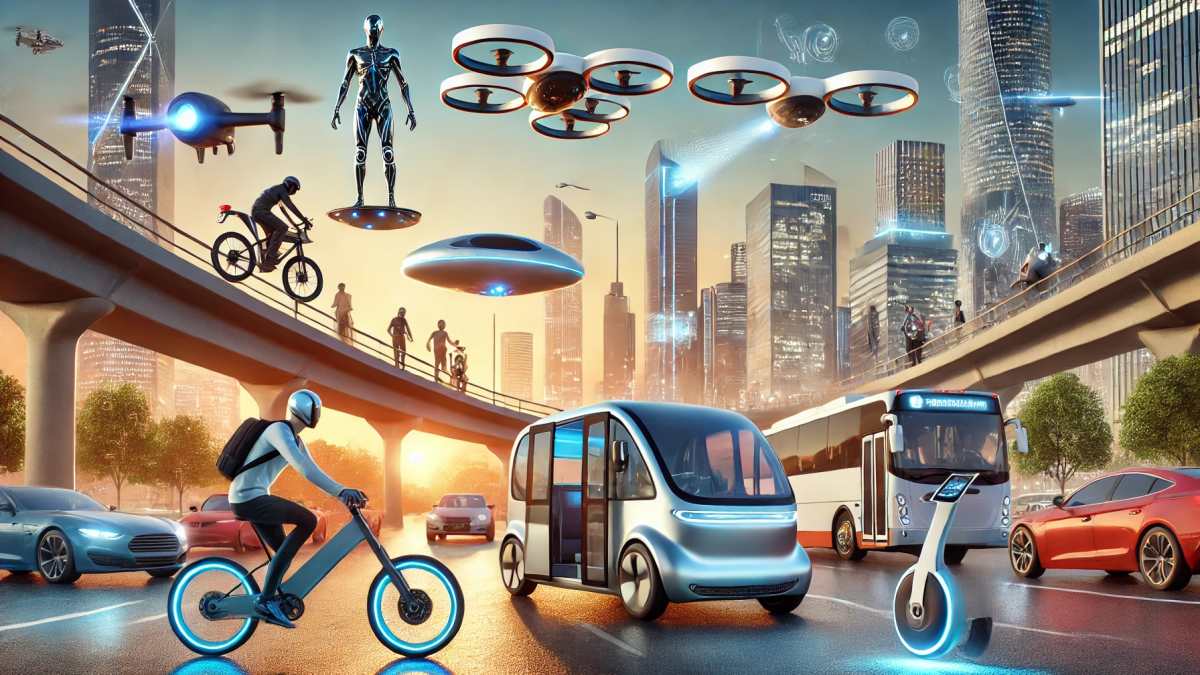
The year 2025 marks an exciting era for urban mobility, where technology-driven innovations are transforming how people move within cities. Among the most talked-about trends are flying cars and the rise of smart cities. Together, they represent a transportation revolution that promises to redefine urban living, reduce congestion, and enhance sustainability.
Flying Cars: From Science Fiction to Reality
Flying cars, once a staple of futuristic movies, are now gradually becoming a reality. Companies across the globe are testing electric vertical take-off and landing (eVTOL) vehicles that can operate autonomously or with minimal human intervention. These vehicles are designed to bypass traditional traffic congestion, enabling commuters to travel faster and more efficiently.
The development of flying cars is not just about convenience—it’s about efficiency and sustainability. Many of these vehicles are powered by electric batteries or hybrid engines, reducing carbon emissions compared to traditional automobiles. By 2025, several pilot programs in cities like Dubai, Los Angeles, and Singapore have already started integrating flying cars into their transportation networks, signaling a major shift in urban mobility.
Read Also: Otomotif Nasional Berbenah, Sambut Era Mobilitas Modern
Smart Cities: The Backbone of Modern Mobility
Flying cars alone cannot revolutionize transportation without the infrastructure to support them. This is where smart cities come into play. A smart city leverages digital technologies, the Internet of Things (IoT), and artificial intelligence to manage urban resources efficiently. Traffic management systems, connected road networks, and predictive analytics allow cities to optimize transportation routes, improve safety, and reduce energy consumption.
In a smart city of 2025, flying cars will seamlessly integrate with ground transportation, public transit, and even delivery drones. Real-time data analytics will ensure that vehicles avoid congested areas, parking shortages, and potential hazards. Moreover, citizens will have access to applications that provide instant updates on travel time, vehicle availability, and energy-efficient routes.
The Role of Data and AI
Artificial intelligence is at the core of the flying car and smart city revolution. AI algorithms help vehicles navigate urban skies safely, predict traffic patterns, and coordinate with ground-based transportation systems. Machine learning models continuously adapt to changing weather, air traffic, and commuter behavior, creating a dynamic and responsive urban transport network.
For instance, AI-powered platforms like togelslot88—originally known for data analytics applications in various sectors—are finding innovative roles in transportation optimization. By analyzing massive datasets, these platforms can predict peak travel hours, suggest alternative routes, and optimize fleet management for urban air mobility companies. This integration ensures smoother commutes and a safer, more efficient city.
Challenges to Overcome
Despite the excitement, several challenges must be addressed for flying cars to become mainstream. Airspace regulation, safety protocols, noise pollution, and public acceptance are significant hurdles. Governments and regulatory bodies are currently working to develop standards that ensure safety without stifling innovation.
Smart city integration also requires massive investments in infrastructure and technology. Cities must build vertiports for flying cars, implement AI-driven traffic management systems, and ensure secure data handling to prevent cyber threats. Balancing innovation with practicality and sustainability remains a central concern.
The Future Outlook
Looking ahead, the synergy between flying cars and smart cities will redefine the urban experience. Commuters will spend less time stuck in traffic, goods will be delivered faster, and urban spaces will be designed with more efficiency and sustainability in mind. By 2025, early adopters of these technologies are already seeing the benefits, and broader adoption is expected to accelerate in the coming decade.
Moreover, as platforms like togelslot88 continue to expand their role in data analytics and mobility solutions, the future of urban transportation will become even more interconnected. Flying cars will not only represent a leap in technology but also a step toward smarter, more responsive, and environmentally conscious cities.
The transportation revolution of 2025 is more than just a technological upgrade—it is a fundamental transformation of urban life. Flying cars, smart cities, and advanced data analytics are converging to create a future where mobility is faster, safer, and more sustainable. While challenges remain, the potential benefits for citizens, businesses, and the environment are immense. As we move further into this decade, embracing these innovations will be crucial for cities aiming to thrive in the new era of transportation.
Flying cars and smart cities are no longer a distant dream—they are becoming the blueprint for the urban landscape of tomorrow.